Neuroendocrine Control of Energy Balance
Our laboratory’s overarching goal seeks to understand the neuroendocrine systems regulating energy balance and motivated behaviors. Using multiple approaches from the cell to the whole organism and extensively examine the role of various neuroendocrine signaling systems (e.g., GLP-1, leptin, amylin, CCK, serotonin, glutamate, and dopamine) in peripheral and central control of food intake and body weight regulation.

Overall, our research program takes a novel systems-neuroscience approach aimed at enhancing the development of realistic pharmacological-based therapeutics to treat obesity and associated comorbidities (e.g. obesity, eating disorders, diabetes, drug addiction and nausea / malaise).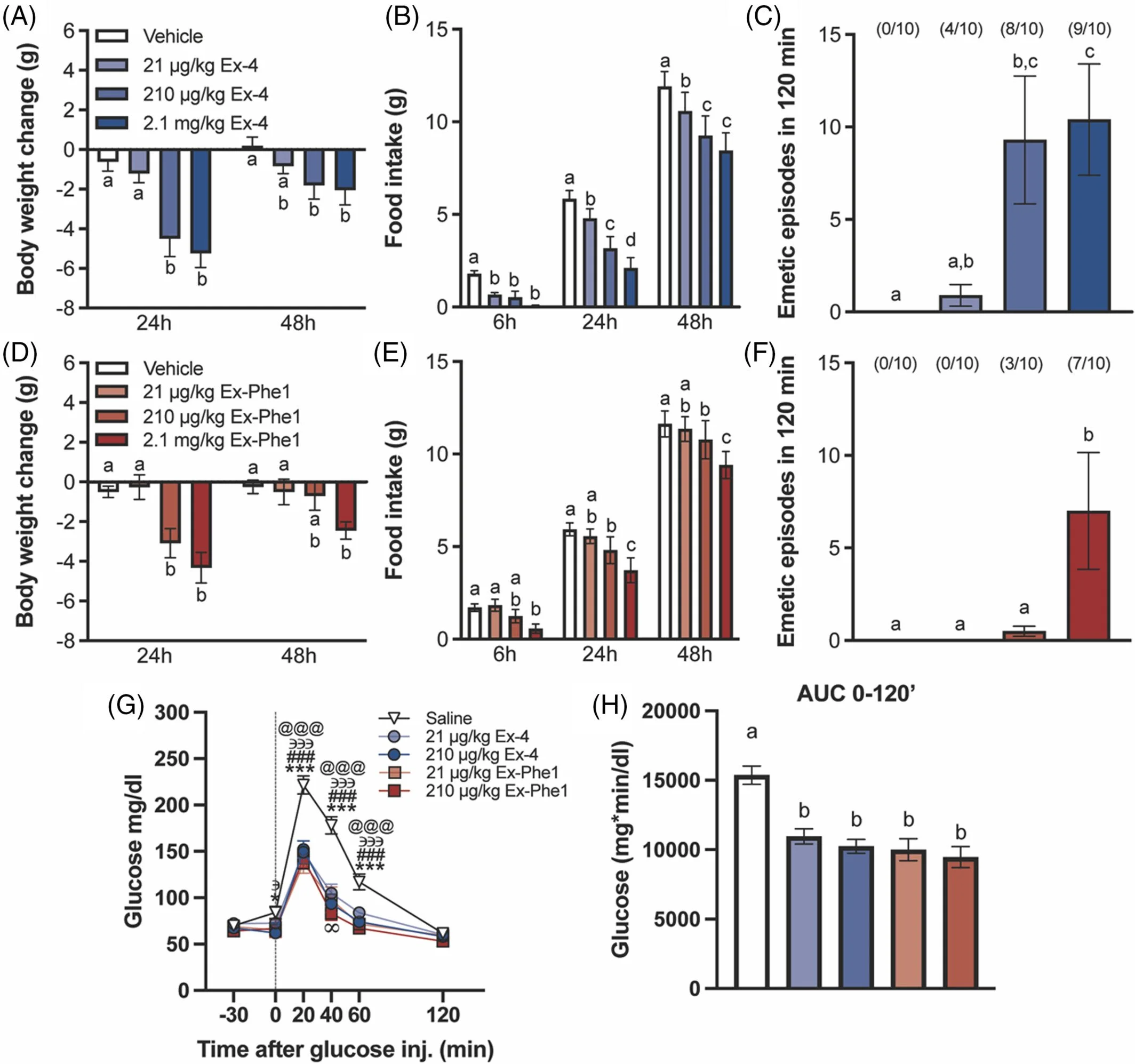
GLP-1R biased cAMP agonism maintains glycemic control with reduced malaise and emesis in preclinical mammalian models
Glucagon-like peptide-1 receptor (GLP-1R) agonists improve glycemic control and promote weight loss in diabetes and obesity but are also associated with gastrointestinal adverse events, including nausea and emesis in many patients. These concerns highlight the need for the development of novel GLP-1R agonists that minimize these side effects while maintaining beneficial metabolic outcomes. Here, we investigate the in vivo effects of exendin-4-Phe1 (Ex-Phe1), a GLP-1R biased agonist.