From Satiety to Substance Use: Neural Mechanisms of GLP-1 Signaling in Appetite and Reward
The central glucagon-like peptide-1 (GLP-1) system encompasses homeostatic and hedonic neural circuits. GLP-1-producing neurons within the brainstem project broadly to GLP-1 receptor (GLP-1R)-containing brainstem, hypothalamic, limbic, and mesolimbic nuclei. The diverse expression of the GLP-1R throughout metabolic and reward nuclei positions this system to integrate motivated behavior with physiological state. GLP-1 acts as a state-dependent "behavior-ending" signal that suppresses appetite, promotes satiety, and dampens hedonic and motivational reward value-effects that extends beyond palatable foods. GLP-1R agonists, which can partially cross the blood-brain-barrier, engage central GLP-1Rs via circumventricular organs and adjacent nuclei leading to polysynaptic relays that suppress feeding and drug-seeking behaviors. An abundance of preclinical and clinical evidence highlights the efficacy of GLP-1R agonists for the treatment of obesity and other metabolic disorders. Emerging evidence also indicates the therapeutic application may extend to other disorders characterized by reward-related maladaptive behaviors, including substance use disorders.
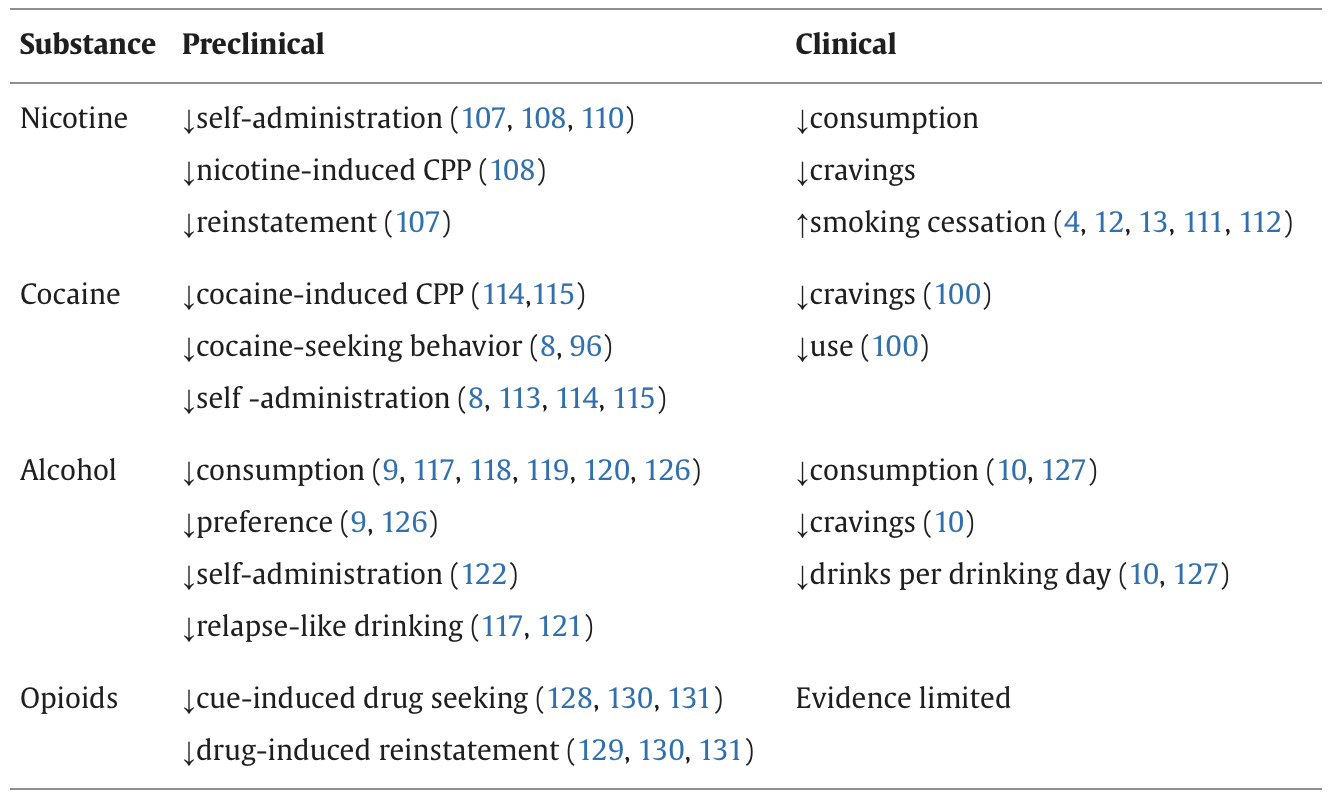
Table 2. Summary of the suppressive effects of GLP-1R agonists on drug taking/seeking behaviors from preclinical and clinical studies with different substance use disorders.
CPP = conditioned place preference