Emerging data suggest more young women than men are prescribed weight loss pharmacotherapies targeting the glucagon-like peptide-1 receptor (GLP-1R). However, preclinical literature has largely used male animals to characterize the neural mechanisms underlying the weight loss abilities of GLP-1R agonists (GLP-1RAs), highlighting a need for female-specific investigations. Recently, we described data pointing to the female estrous cycle as a possible moderator of GLP-1RA's effects in rats. Expression of brainstem Glp1r and the GLP-1 precursor gene, Gcg, increased during two estrous phases, proestrus and estrus (P/E), compared to males and compared to other phases, metestrus and diestrus (M/D). On this basis, we hypothesized that the weight-reducing effects of GLP-1RAs may be potentiated during P/E. Publication link
Glp1r expression across the estrous cycle in lean animals
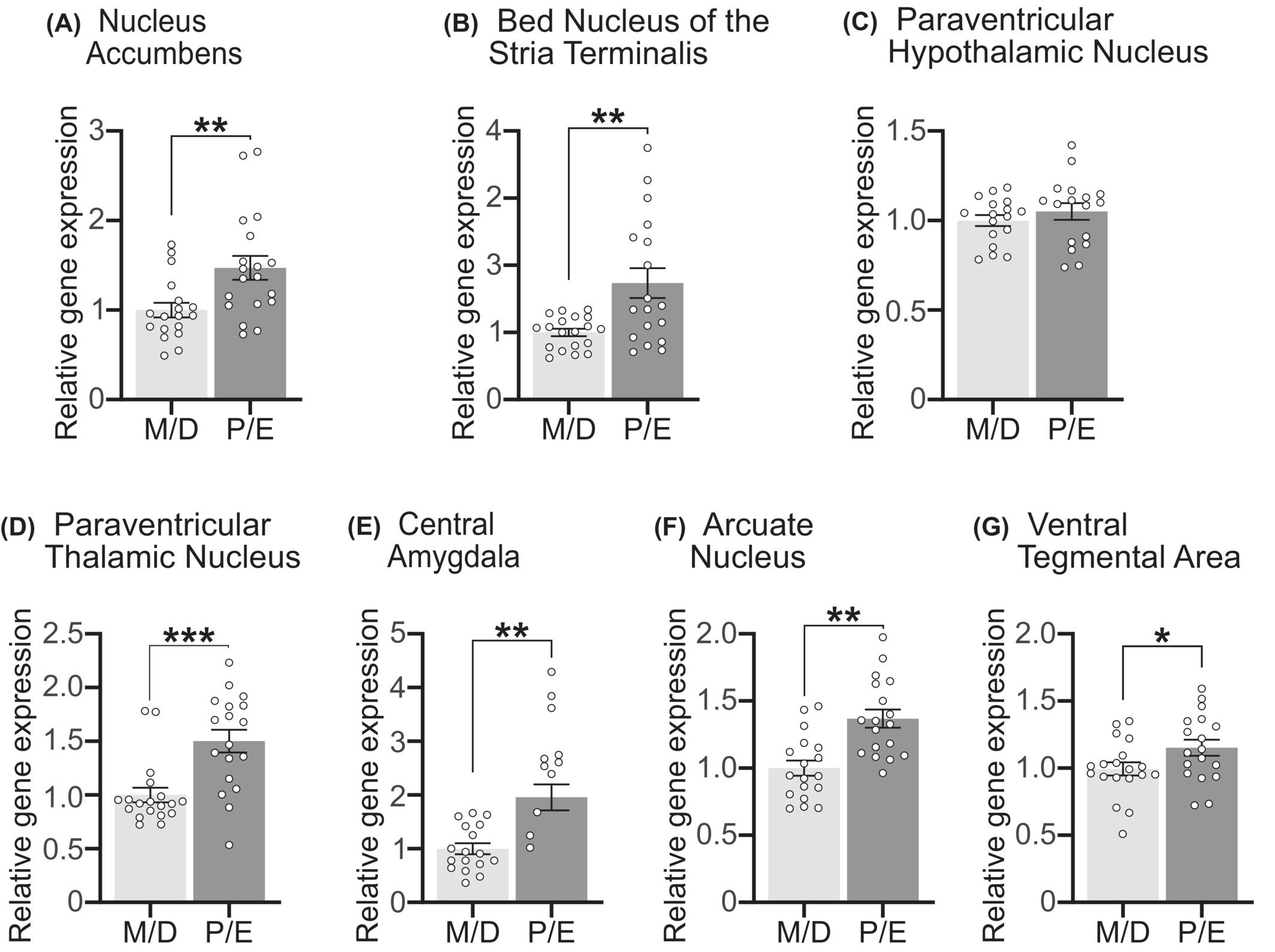
In lean female rats, Glp1r expression was greater during combined Proestrus/Estrus (P/E) compared to animals in Metestrus/Diestrus (M/D) in the (A) Nucleus Accumbens, p = 0.0055, (B) Bed Nucleus of the Stria Terminalis, p = 0.0023, (D) Paraventricular Thalamic Nucleus, p = 0.0003, (E) Central Amygdala, p = 0.0016, (F) Arcuate Nucleus, p = 0.0002, and (G) Ventral Tegmental Area, p = 0.045, but not in the (C) Paraventricular Hypothalamic Nucleus, p = 0.378. n = 17–20/group, between-subjects design. p < 0.05; *p < 0.01; ***p < 0.001.